
The first photo was taken under flat, ambient light — two catchlights on either side of the irises, a couple of open hangar doors doing the work. Ordinary. Forgettable.
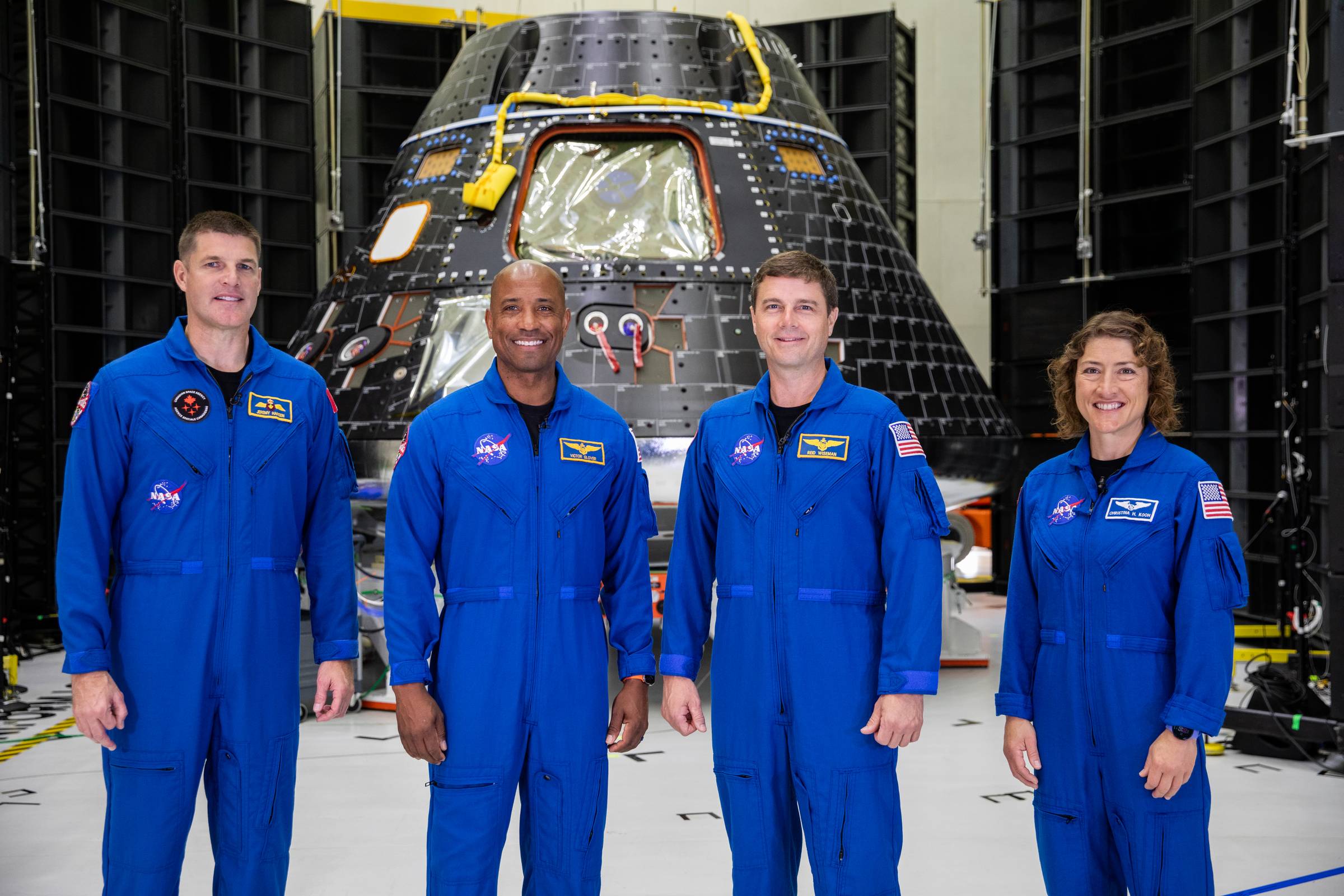
Now, same four people but using dramatic light. Suddenly they look like a movie poster.
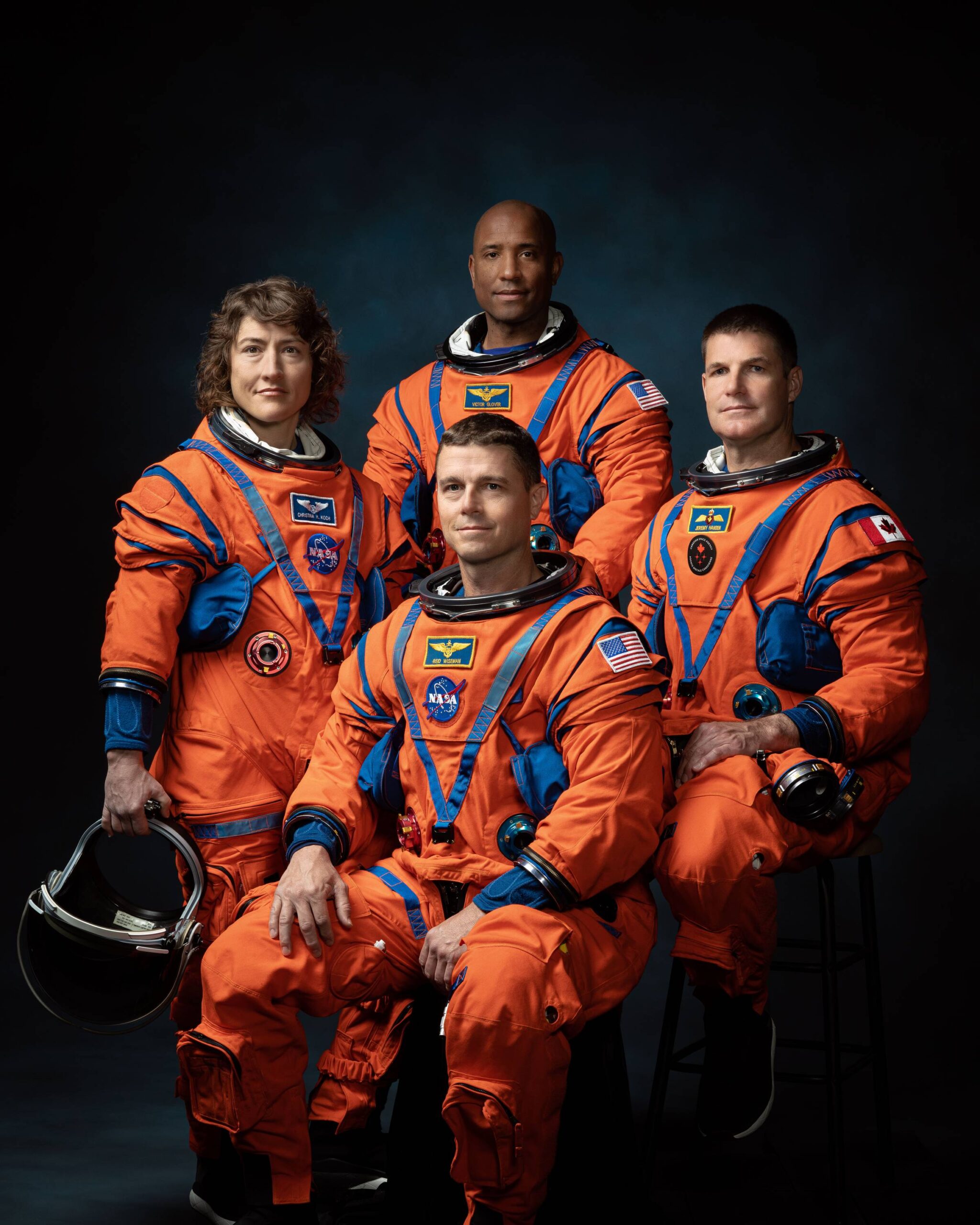
The second image was shot in 2023 by Josh Valcarcel, scientific photographer at NASA. The subjects are the Artemis II crew: Reid Wiseman, Victor Glover, Christina Koch, and Jeremy Hansen — four human beings preparing to bring humanity back to the moon.
The group portrait: movie poster lighting
For the crew shot, Valcarcel used a Hasselblad medium format camera. The setup was built around three goals: sculpt the subjects, create depth, and separate them from the background. He used heavy-duty Speedotron flash units, a square softbox at the front, a lateral fill light, and a dish with barn doors aimed at the backdrop.
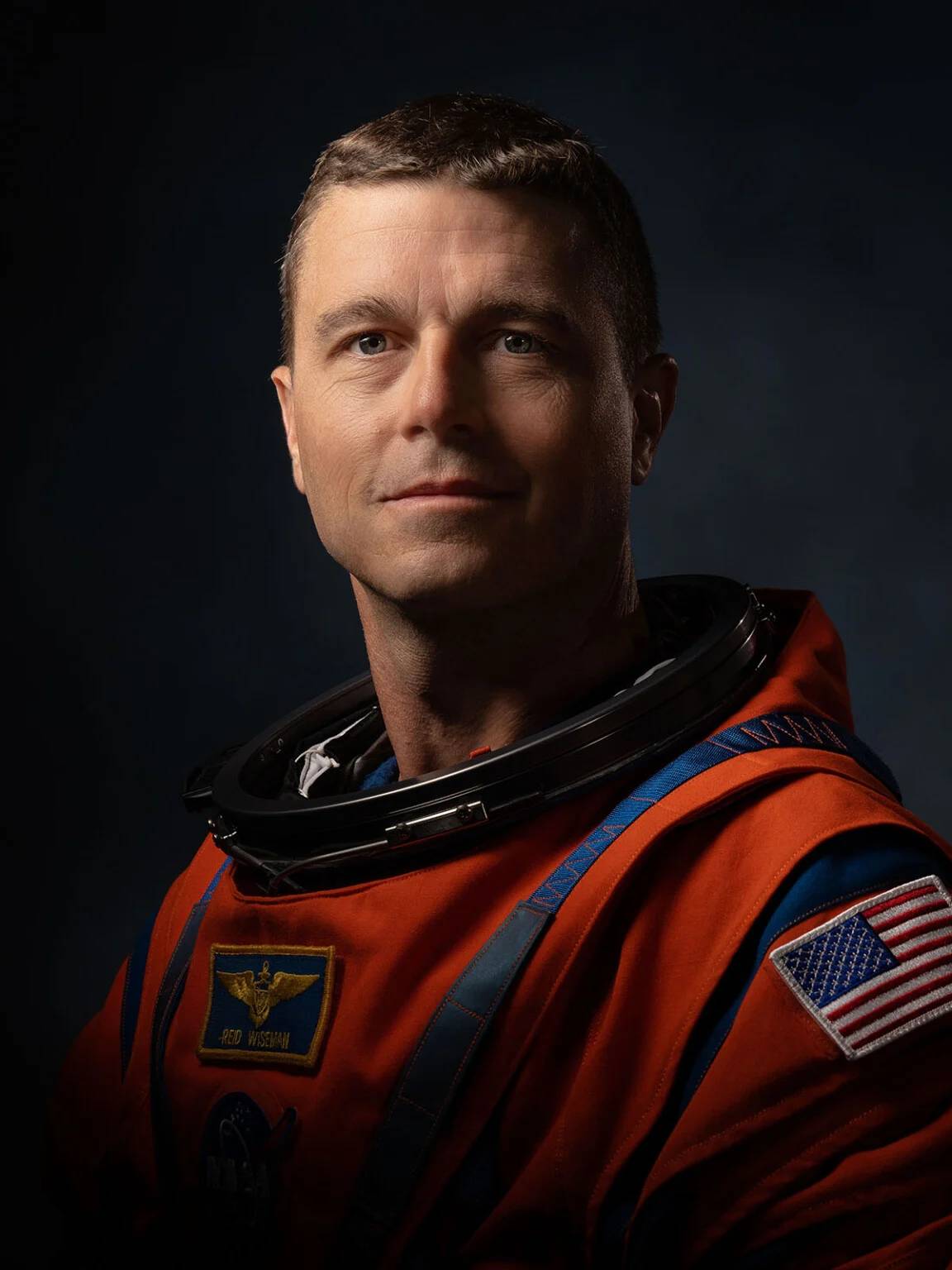
The individual portraits: Rembrandt on the moon
For the solo portraits, he switched to a Nikon Z9 at f/11 — to keep every detail sharp, from flag patches to name tags. A key light at 45° creates the classic Rembrandt triangle on the shadow-side cheek. A hair light with a snoot adds a tight rim that almost reads like a reflection of the lunar surface.
What this means for your own work
You don’t need NASA’s budget to recreate this. A mirrorless camera, two off-camera flashes, and a gridded softbox will get you most of the way there. The rest is intentionality — deciding where the light goes and what it should say about the person in front of you.
Flat light is neutral. Dramatic light takes a position. It says: here is a hero.
👉 Watch the full breakdown on YouTube.